Be yourself; Everyone else is already taken.
— Oscar Wilde.
This is the first post on my new blog. I’m just getting this new blog going, so stay tuned for more. Subscribe below to get notified when I post new updates.
Be yourself; Everyone else is already taken.
— Oscar Wilde.
This is the first post on my new blog. I’m just getting this new blog going, so stay tuned for more. Subscribe below to get notified when I post new updates.
Do you know the Kingdom of Eswatini?
On 19 April 2018, King Mswati III announced that the Kingdom of Swaziland had renamed itself the Kingdom of Eswatini, reflecting the extant Swazi name for the state eSwatini, to mark the 50th anniversary of Swazi independence. (Aljazeera, 2018)
Eswatini is a monarchy and has Mbabane as its capital and largest city in Eswatini. While for Lobamba is the traditional and legislative capital city of Eswatini.
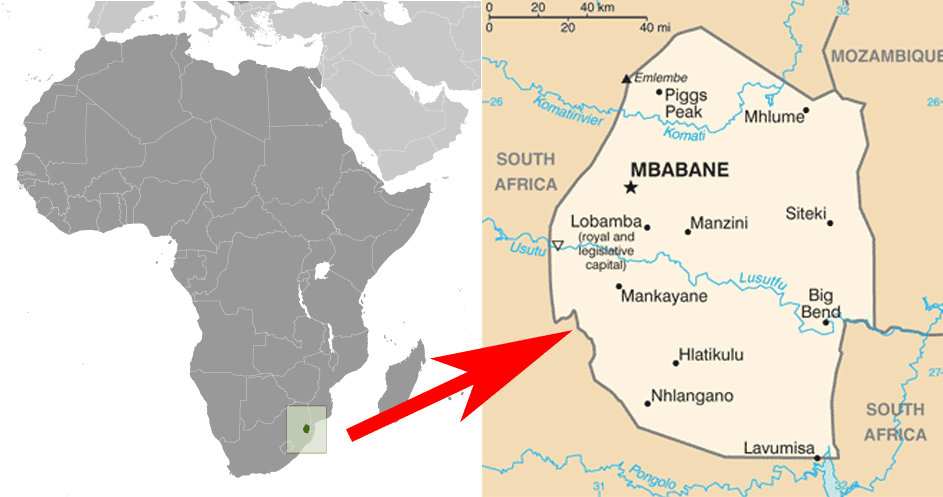
Eswatini is located in the southern part of Africa. Marking its northeastern border with Mozambique and stretching down to South Africa. The currency used is Swazi lilangeni, 1$= 15.20 Swazi lilangeni and their population is approximated to 1.367 million in 2017.
To enter in the Kingdom of Eswatini you need full passport valid for at least three months is required for entry into Eswatini (formerly Swaziland). For tourist visits, visas are NOT required by citizens of most Commonwealth countries, the USA, Japan, most European Union countries and certain other countries. Tourist or business travellers are allowed to visit Eswatini for up to 30 days. Following this you can apply for a further 30-day extension at the Ministry of Home Affairs. If staying for longer than 60 days, you will need to apply for a Temporary Residence Permit (TRP). (The Kingdom of Eswatini, 2018). When i was in Eswatini, the process of getting a visa was easy and it didn’t take long to get my visa.
When you get in Eswatini there are various places to visit and activities to do in the Kingdom. Here i am going to list the top five places that need to be visited, according to Planet aware.com
Apart from those places to visit the Eswatini kingdom there exist other uniqueness that eswatini have to offer which is the magnificent traditional festivals that the country hosts. Chief amongst these is the Umhlanga (Reed Dance) held in August / September, the Incwala held in December / January and the Marula Festival in February-March. These are living cultural events that, bar the odd wristwatch and mobile phone, have hardly changed in two hundred years. Visitors are allowed to watch, but the ceremonies make no concession to tourism; even the precise dates are not published in advance, being dependent on the vagaries of ancestral astrology. The main events happen at the royal parade grounds at Ludzidzini or other royal residences, but the mood of celebration sweeps the nation, and visitors to the country around the time of the events will doubtless see wandering bands of warriors or maidens decked out in full regalia as they head to or from the festivities. (The Kingdom of Eswatini, 2018)
And if you are worried about the security in Eswatini, it is by-and-large, a safe country in which to travel. It does not have the same level of the crime rate of the neighboring countries that are in the same region as Eswatini
To conclude Eswatini (Swaziland) is one of the best place and if you do so you will be having no regrets as you will have experienced a real Eswatini experience.
Before logging off check this beautiful video of The beautiful Eswatini http://A video on tourism of swaziland https://www.youtube.com/watch?v=qF3Blsouix4
Bibliography
Hastings, k. (2019). 10 Top-Rated Tourist Attractions in Swaziland | PlanetWare. [online] Planetware.com. Available at: https://www.planetware.com/tourist-attractions-/swaziland-saf-swz-swz.htm [Accessed 22 Aug. 2019].
The Kingdom of Eswatini. (2019). Visa Guide | The Kingdom of Eswatini (Swaziland). [online] Available at: http://www.thekingdomofeswatini.com/visa-guide/ [Accessed 22 Aug. 2019].
This is an example post, originally published as part of Blogging University. Enroll in one of our ten programs, and start your blog right.
You’re going to publish a post today. Don’t worry about how your blog looks. Don’t worry if you haven’t given it a name yet, or you’re feeling overwhelmed. Just click the “New Post” button, and tell us why you’re here.
Why do this?
The post can be short or long, a personal intro to your life or a bloggy mission statement, a manifesto for the future or a simple outline of your the types of things you hope to publish.
To help you get started, here are a few questions:
You’re not locked into any of this; one of the wonderful things about blogs is how they constantly evolve as we learn, grow, and interact with one another — but it’s good to know where and why you started, and articulating your goals may just give you a few other post ideas.
Can’t think how to get started? Just write the first thing that pops into your head. Anne Lamott, author of a book on writing we love, says that you need to give yourself permission to write a “crappy first draft”. Anne makes a great point — just start writing, and worry about editing it later.
When you’re ready to publish, give your post three to five tags that describe your blog’s focus — writing, photography, fiction, parenting, food, cars, movies, sports, whatever. These tags will help others who care about your topics find you in the Reader. Make sure one of the tags is “zerotohero,” so other new bloggers can find you, too.

 Joel's Blog